
Aerospace & Defense
Replace the machined metal.Molded carbon fiber for aircraft and defense.
Brackets, fittings, rails and tie rods molded as single pieces with the bosses and inserts already in them. Lighter than machined aluminum or printed titanium, held to ±0.1 mm, and built at production rate.
Made in the U.S.A. No China-sourced material.
What we make for aircraft and defense
Secondary structure and hardware that is machined from metal today, molded in carbon fiber instead.

Brackets & fittings
Bosses, threaded inserts and bushings molded in. Replaces machined aluminum or printed titanium with no secondary machining.
79% lighter than printed titanium†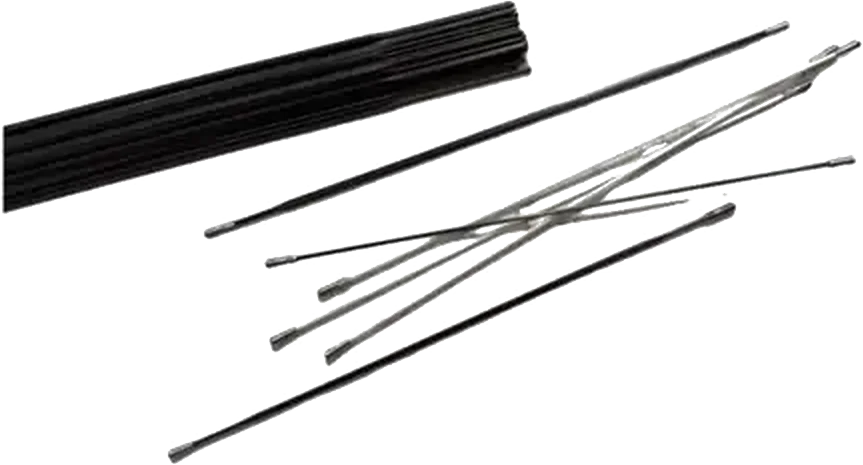
Tie rods & struts
Continuous-fiber rods with the end fittings molded on. Bracing, control and landing-gear struts.
1,000,000+ produced and holding tension today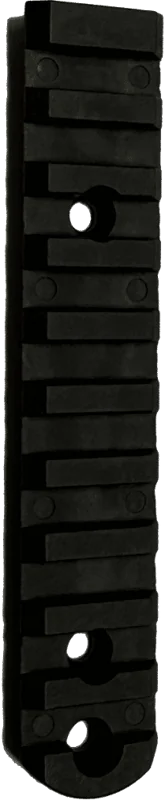
Rails & mounts
Picatinny and accessory rails molded as one piece, or molded straight into a housing or body.
49% lighter than machined aluminumArris parts vs. the metal part you machine today
Most aircraft brackets and hardware are machined from aluminum or, lately, printed in titanium. Here is what changes when the part is molded in continuous carbon fiber.
| Machined aluminum | 3D-printed titanium | Arris molded part | |
|---|---|---|---|
| Weight | Baseline. | Lighter than aluminum, with topology optimization. | Lightest. Half the weight of aluminum at the same stiffness.‡ 79% lighter than the printed titanium bracket.† |
| Features | Every boss and hole is machining time. | Printed, then machined to tolerance. | Molded in. Bosses, inserts and bushings come out of the tool. |
| Tolerance | Tight, at a price. | Needs post-machining. | ±0.1 mm as-molded. No secondary machining. |
| Rate | Cycle time scales with features. | Hours per part. | Minutes per part. Same tool, tens of thousands of parts. |
| Fatigue & vibration | Transmits vibration; fatigue at stress risers. | Transmits vibration. | Damps it. Thermoplastic matrix, fiber aligned to the load path. |
| Origin | Varies. | Varies. | Made in the U.S.A. No China-sourced material. |
| Price at volume | Rises with complexity. | High. | Falls with volume. Tooling amortized into the part price. |
A molded carbon fiber part is designed to the same interfaces and the same stiffness as the metal part it replaces, so nothing around it changes. Fiber goes where the load goes; the bosses and inserts your fasteners need are molded in.
Continuous carbon fiber in a thermoplastic matrix is half the weight of 6061 aluminum at the same stiffness and five times the strength.‡ It also damps vibration that metal transmits.
Not every part should be composite. Hot sections, high-bearing-load pins and some fittings are better left in metal, and we say so in the first review.
Who we work with
Government programs, aerospace primes and defense partners. Some in production, some in development.

U.S. Air Force
High-rate composite manufacturing
Awarded an AFWERX contract to advance high-rate thermoplastic composite manufacturing for Air Force platforms: lightweight, high-strength structural components for next-generation aircraft and UAVs.

Airbus
Cabin bracket, metal to molded
A research project with Airbus replacing a 220 g metal cabin bracket with a 50 g molded carbon fiber part: fibers aligned in three dimensions to the load path, more than 75% lighter per bracket.§
ST Engineering
Joint composite development
“Through our investment in Arris, we will jointly develop innovative composite products that elevate ST Engineering’s aerospace solutions.”Jeffrey Lam, President, Commercial Aerospace, ST Engineering
Northrop Grumman
Titanium bracket, same stiffness
A 3D-printed titanium aircraft bracket redesigned as one molded continuous-fiber part and tested against the original by Northrop Grumman Space Systems: same stiffness at 21% of the weight.†
Henry Repeating Arms
Lighter Picatinny rail
Technology partnership with Henry Repeating Arms for lighter, stronger firearm components. A one-piece molded Picatinny rail at 18.2 g replaces a 35.4 g machined aluminum rail.

U.S. Army DEVCOM
Composite plates in military boots
Selected by the U.S. Army for a research study on advanced continuous fiber composite insoles in military boots.
Customers and partners
Have a metal part to take weight out of?
Send the drawing or STEP file. An Arris engineer comes back with what we'd hold, what we'd change, and what it would weigh.
† Aerospace bracket study with Northrop Grumman Space Systems: 76 g 3D-printed titanium bracket vs. 16 g molded continuous-fiber bracket at the same stiffness. Details in the Arris bracket white paper.
‡ Material properties of Arris CF/PC compared with 6061-T6 aluminum, not measured on a specific part.
§ Airbus cabin bracket research project (2021): 220 g metal bracket replaced by a 50 g topology-optimized continuous-fiber composite part.